HUD Smart Glasses Comparison Guide for 2026 Buyers
A HUD smart glasses comparison is the process of lining up heads-up display eyewear side by side across display type, field of view, battery life, microphone quality, and AI assistant support so you can pick the model that actually fits how you live. With dozens of designer-style AI frames, AR waveguide glasses, and sport HUD models on the market in 2026, choosing the wrong one usually means paying for features you never use.
Quick answer: The best way to run a HUD smart glasses comparison is to rank candidates by your main use case first (camera capture, translation, AR display, or sport data), then filter by field of view, battery life, weight, and live retailer pricing before buying.
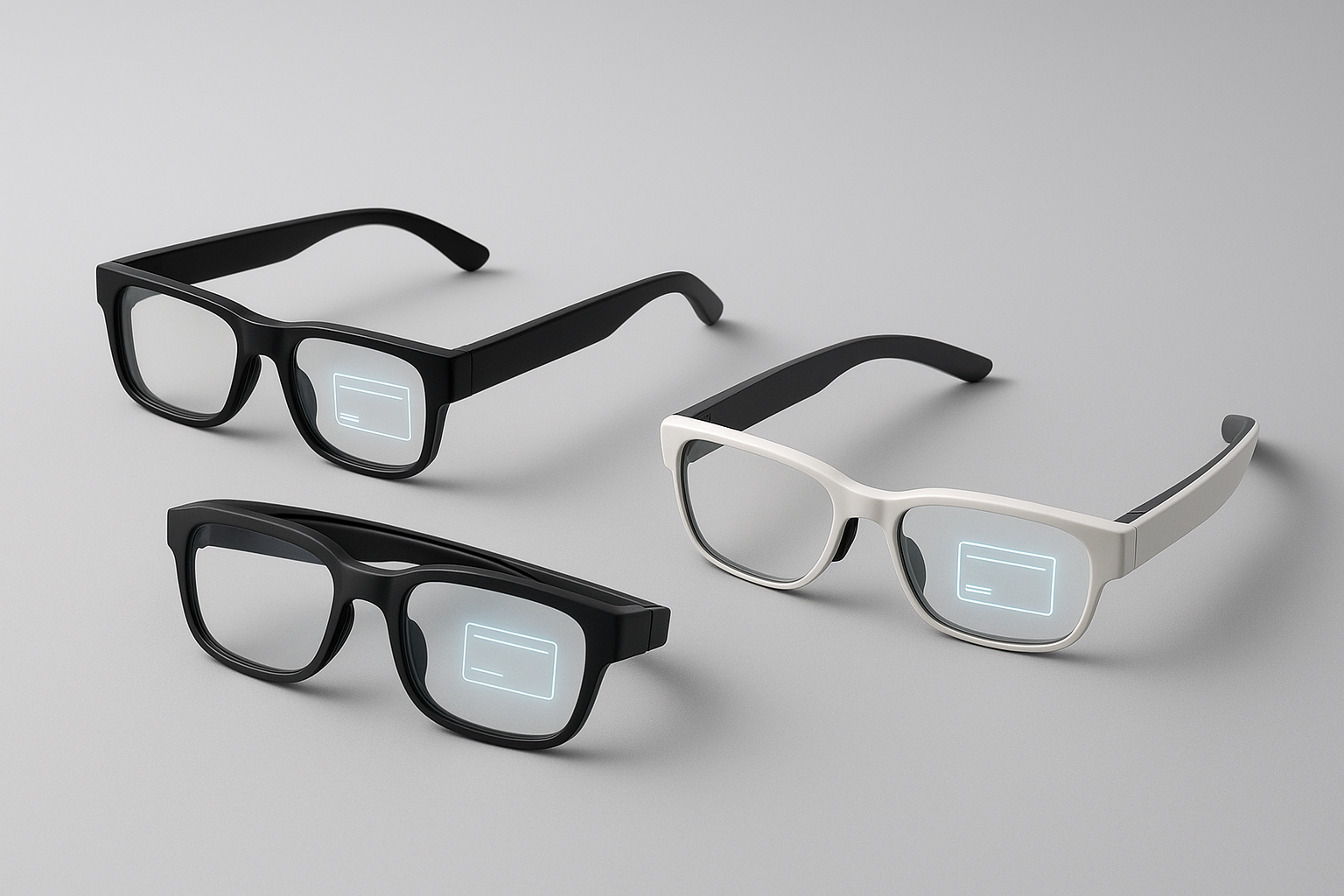
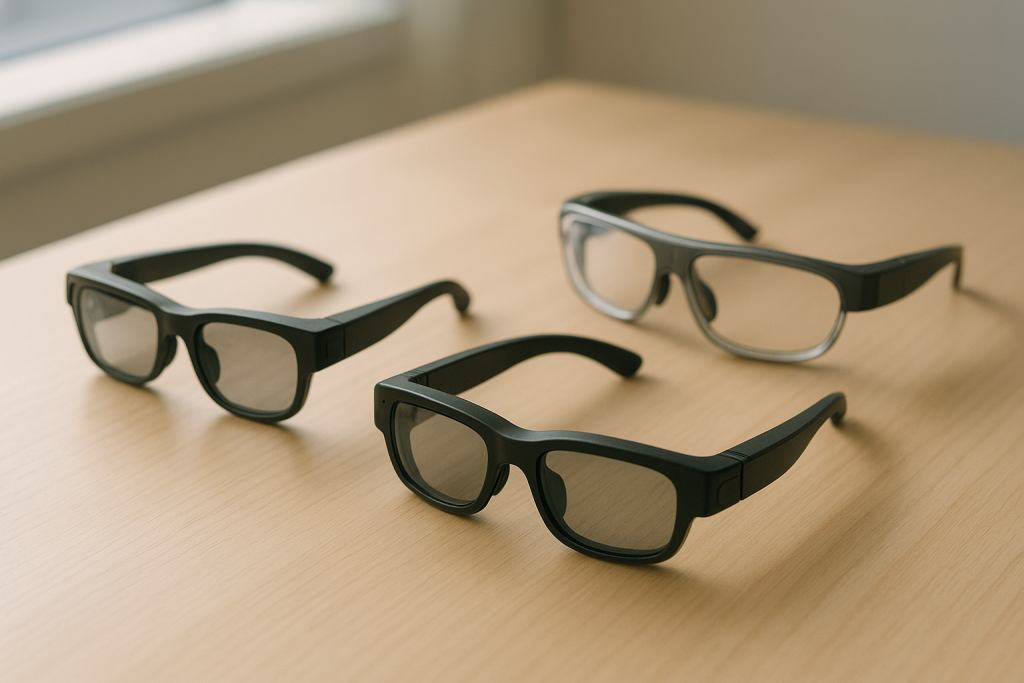
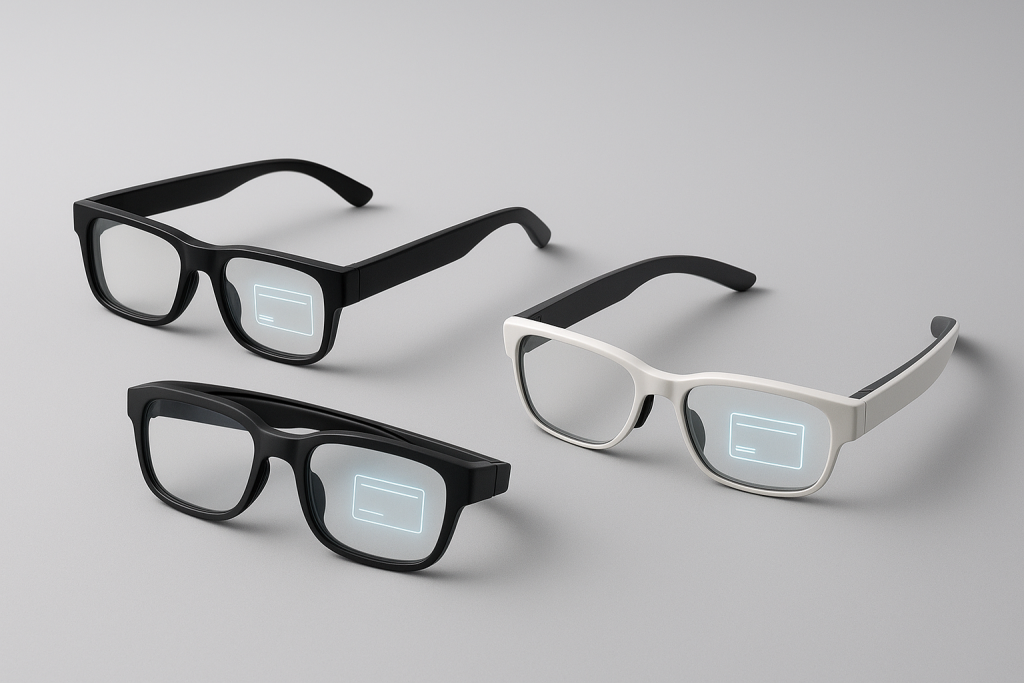
A visual HUD smart glasses comparison helps buyers spot display, fit, and feature differences at a glance.
What Is a HUD Smart Glasses Comparison?
A HUD smart glasses comparison is a structured look at how different heads-up display eyewear perform against each other on measurable specs, rather than marketing claims. In particular, it weighs display technology, optical field of view, battery runtime, microphone array quality, and AI assistant depth. As a result, shoppers can match a model to a real task, such as hands-free navigation or live translation, instead of guessing from a glossy product photo.
Unlike a general smart glasses review, a comparison format puts multiple models in one table or list so the trade-offs are obvious. For example, one frame might offer a wider field of view but shorter battery life, while another trades display brightness for all-day comfort. Therefore, the comparison itself becomes the decision-making tool, not just background reading.
HUD Smart Glasses Comparison: Key Specs to Check
Every solid HUD smart glasses comparison starts with the same handful of specs. However, how much weight you give each one depends entirely on your intended use. Below are the categories that matter most, broken down individually so you can judge them on their own merits.
Display Type and Field of View
Display type is the single biggest differentiator in any head-up display product. Simple HUD prisms project a small data patch, typically for time, directions, or notifications, into one corner of the lens. In contrast, true AR waveguide displays spread graphics across a wider visual area, supported by a more complex optical engine. Field of view, measured in degrees, tells you how much of that display area you can actually see without moving your eyes. A 20 to 30 degree range suits quick-glance information, while 40-plus degrees supports richer, more immersive overlays.
Battery Life and Gram Weight
Battery life and weight go hand in hand because bigger batteries add grams to the frame. Specifically, most HUD smart glasses deliver 4 to 8 hours of mixed use, while audio-only designs can stretch past a full day. Consequently, buyers who plan to wear glasses from morning commute through evening workouts should prioritize battery capacity over display brightness.
Microphone Arrays and AI Assistant Support
A multi-microphone array filters wind and crowd noise far better than a single mic, which matters enormously for voice commands and calls. Above all, AI assistant depth determines whether the glasses can handle natural conversation, real-time translation, or only basic wake-word commands. In addition, some models route AI processing to a paired phone app, which can introduce lag during translation tasks.

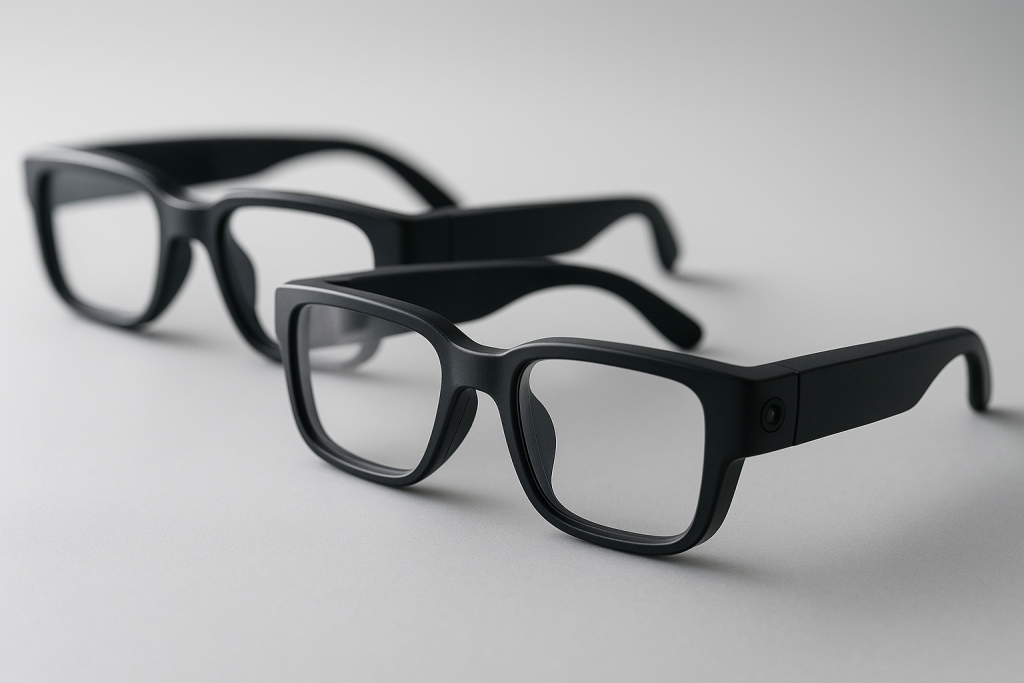
Waveguide optics are a key factor to examine in any HUD smart glasses comparison.
Comparing Use Cases: Camera, AR Display, Translation, and Sport HUD
Because no single pair of glasses excels at everything, comparing by use case is often more useful than comparing by brand. For instance, someone who mainly wants hands-free photo and video capture should weigh camera sensor quality and storage far more heavily than field of view.
Readers exploring hands-free capture in depth can review our dedicated breakdown of AI camera smart glasses built for hands-free capture. Similarly, anyone who travels frequently should look closely at AI translation smart glasses with real-time subtitles, since microphone quality matters more than display brightness in that category.
Sport HUD glasses, meanwhile, prioritize glare resistance and interchangeable lenses alongside live pace or heart-rate data. In contrast, assistive AI vision glasses for low-vision users focus on text-to-speech accuracy and object recognition rather than any visual overlay at all. Therefore, defining your primary use case before comparing specs prevents paying for features that add cost without adding value.
Quick Comparison Table
| Category | Typical Field of View | Typical Battery Life |
|---|---|---|
| Camera capture glasses | No visual HUD | 4–6 hours active use |
| AR waveguide display | 30–45 degrees | 3–5 hours active use |
| Translation glasses | 20–25 degrees | 5–7 hours active use |
| Sport HUD glasses | 15–25 degrees | 6–8 hours active use |
Figures reflect typical ranges reported across current consumer HUD and AR eyewear listings; actual performance varies by model and settings.
How to Compare HUD Smart Glasses in 5 Steps
Running your own comparison does not need to be complicated. Follow this short process to narrow a crowded market down to two or three realistic options.
- Define your primary use case. Decide whether hands-free camera capture, AR navigation, live translation, or sport data matters most, since this determines which display type suits you.
- Compare display type and field of view. Check whether the model uses a simple HUD prism, a birdbath optic, or a waveguide display, and note the stated field of view in degrees.
- Check battery life against your routine. Match the stated battery hours against how long you will actually wear the glasses during display-heavy or camera-heavy days.
- Verify fit, weight, and prescription options. Review face-width notes, gram weight, and prescription-insert availability, since poor fit is a leading cause of returns.
- Track live prices across retailers. Compare the same model across Amazon, eBay, and AliExpress before buying, since listed prices can shift noticeably within a single week.
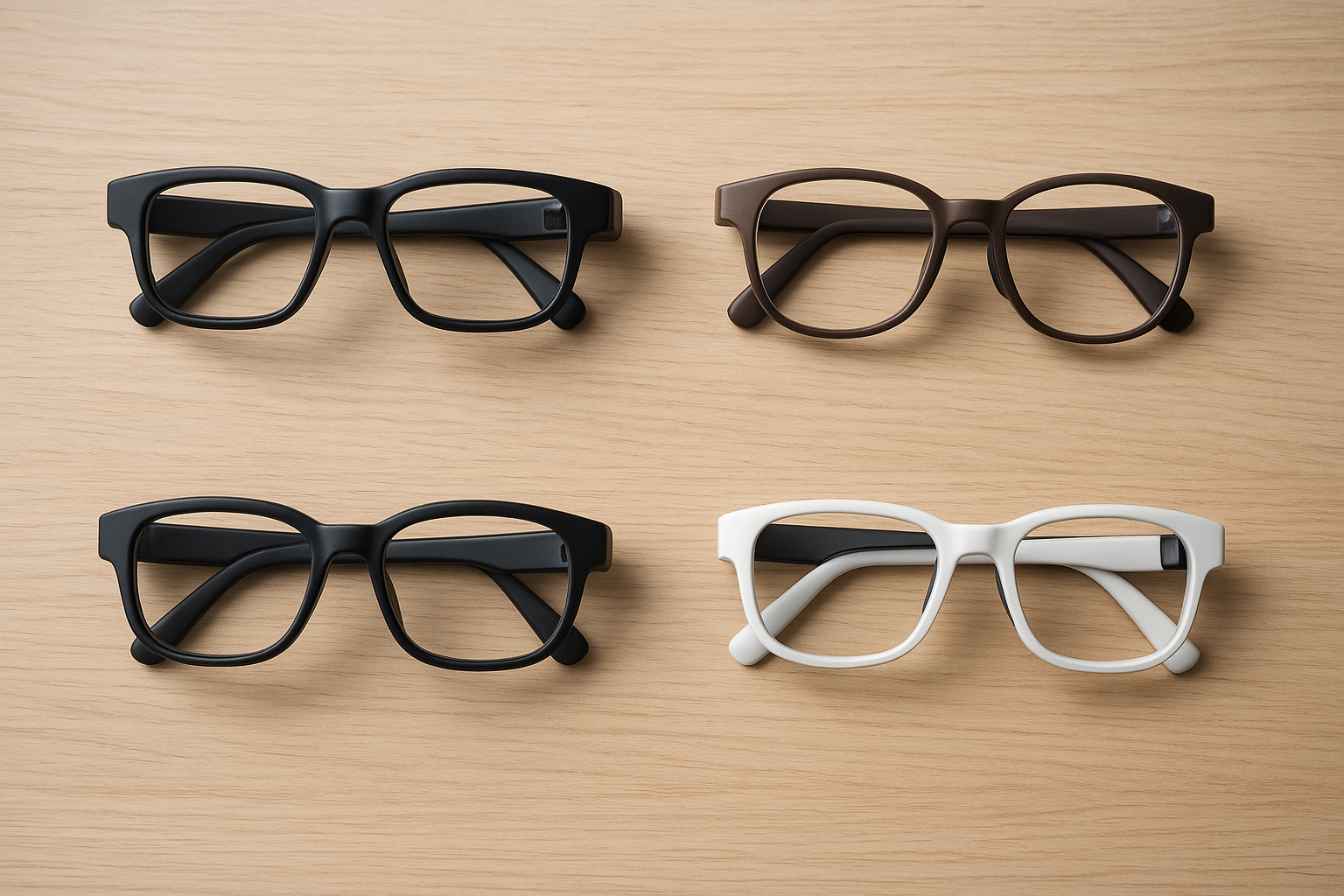
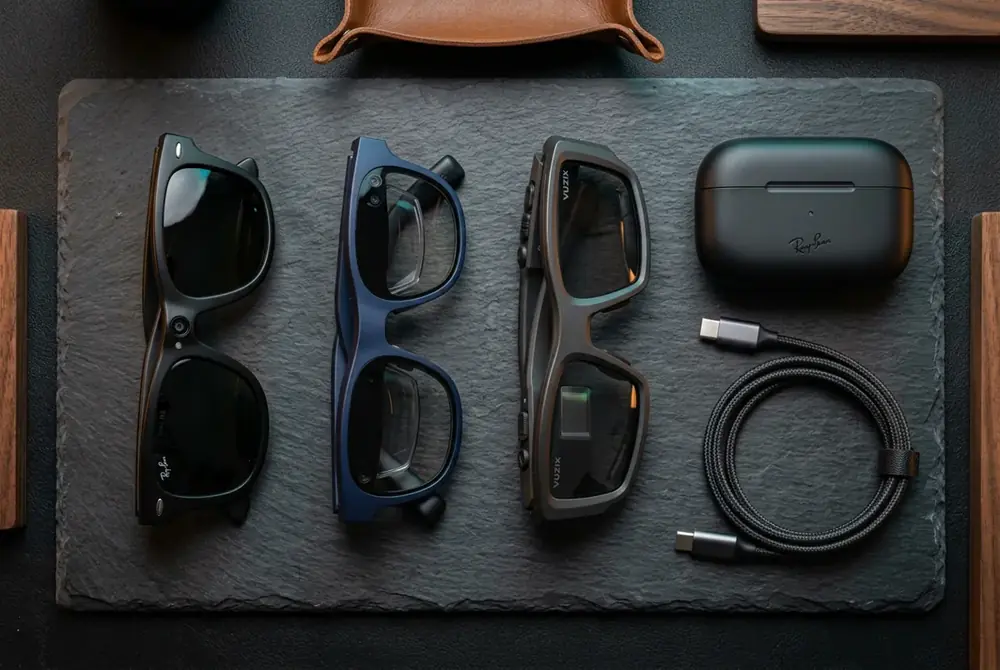
Laying multiple frames side by side makes fit and design differences easier to judge.
HUD Smart Glasses vs Designer AI Frames: What’s the Difference?
Designer-style AI frames, built in the mold of classic Ray-Ban or Oakley shapes, generally skip the visual HUD entirely in favor of audio, camera, and voice assistant features. HUD and AR waveguide glasses, on the other hand, add a visual layer but typically cost more and weigh slightly more as a result. For a deeper side-by-side breakdown of these two categories, see our dedicated comparison of Ray-Ban-style AI glasses versus AR display glasses.
Furthermore, buyers who are still unsure which category fits their habits should start with our broader primer on what actually matters before buying AI smart glasses in 2026, which covers fit, software ecosystems, and privacy considerations beyond raw specs.
Where to Check Prices and Track Deals
Because HUD smart glasses prices move frequently across major marketplaces, checking a live tracker before buying is worth the extra two minutes. According to industry coverage from outlets like Wired, AI wearable pricing has grown more volatile as new entrants compete for shelf space. Similarly, the National Eye Institute notes that assistive vision technology adoption continues rising among low-vision users, which has pushed more assistive AI eyewear models onto the market.
AI Optical Tech Store hand-curates listings for AI smart glasses, HUD sunglasses, and assistive vision hardware, with daily price tracking across Amazon, eBay, and AliExpress alongside spec-first comparisons. In addition, the site offers fit guidance covering face-width notes and gram weights, which pairs naturally with the comparison steps outlined above.
Frequently Asked Questions About HUD Smart Glasses Comparison
What does a HUD smart glasses comparison actually measure?
A HUD smart glasses comparison measures how different heads-up display eyewear perform across display type, field of view, battery life, microphone quality, and AI assistant support. It helps buyers match specs to how they actually plan to use the glasses.
What is the difference between HUD glasses and AR waveguide glasses?
HUD glasses project a small data overlay, such as navigation arrows or workout stats, into one corner of your vision. AR waveguide glasses use a more advanced optical layer to place larger, interactive graphics across a wider field of view.
How long does the battery last on HUD smart glasses?
Most HUD smart glasses run between 4 and 8 hours of mixed use, while lighter audio-only frames can last up to a full day. Heavy display or camera use drains the battery faster than voice-assistant-only tasks.
Are HUD smart glasses worth it compared to a smartwatch?
HUD smart glasses are worth it for hands-free tasks like navigation, translation, or sport performance tracking without looking down at a wrist. A smartwatch remains better for fitness tracking that requires all-day skin contact sensors.
How much do HUD smart glasses typically cost?
Entry-level audio and camera smart glasses typically start around 150 to 250 USD, while true AR waveguide display models often run 300 to 700 USD or more. Prices fluctuate across Amazon, eBay, and AliExpress, so live price tracking helps buyers catch deals.
Can prescription lenses be used with HUD smart glasses?
Many HUD smart glasses brands offer prescription-insert clips that sit behind the display module. However, availability varies by model, so it is worth confirming insert compatibility before buying.
What field of view should I look for in a HUD display?
A field of view between 20 and 30 degrees is common for lightweight HUD glasses and suits quick-glance data like time or directions. Wider fields of view, often found in AR waveguide models, support richer visuals but usually add weight and cost.
Do HUD smart glasses work well for translation on the go?
Yes, translation-focused smart glasses display real-time subtitles directly in your line of sight while a microphone array captures the speaker’s voice. This setup works especially well in quieter indoor settings rather than loud outdoor environments.
What is the most common mistake buyers make in a smart glasses comparison?
The most common mistake is focusing only on price while ignoring gram weight and face-width fit, which affects all-day comfort. A lightweight frame that fits poorly is often less usable than a slightly heavier one that fits correctly.
How does microphone array quality affect HUD smart glasses performance?
A multi-microphone array improves voice command accuracy and call clarity by filtering out wind and background noise. Single-microphone designs tend to struggle outdoors or in crowded spaces.
Are sport HUD glasses different from everyday AI smart glasses?
Sport HUD glasses are built to display live performance data like pace, heart rate, or elevation during activity, often with polarized or interchangeable lenses. Everyday AI smart glasses prioritize style and voice assistant features over athletic data overlays.
Can assistive AI vision glasses read text aloud during a comparison test?
Yes, assistive AI vision glasses designed for low-vision users typically include text-to-speech features that read signs, labels, or documents aloud. These models prioritize audio clarity and object recognition over visual HUD overlays.
How often are HUD smart glasses prices updated on comparison sites?
Reliable comparison sites track retailer prices daily since Amazon, eBay, and AliExpress listings change frequently. Checking a live price tracker before buying helps avoid overpaying during temporary price spikes.
Final Thoughts on Comparing HUD Smart Glasses
Ultimately, a thoughtful HUD smart glasses comparison comes down to matching your real daily habits to the right mix of display type, battery life, fit, and AI features rather than chasing the flashiest spec sheet. Above all, defining your use case first, whether that’s hands-free capture, live translation, AR navigation, or sport data, makes every other decision easier. As a result, checking live prices across Amazon, eBay, and AliExpress before you commit ensures you are not overpaying for last week’s deal. Whichever model you land on, running the five-step comparison process outlined here will leave you far more confident than relying on marketing copy alone.
Ready to compare frames?
Every listing links straight to Amazon, eBay and AliExpress for live pricing.
Browse the shop